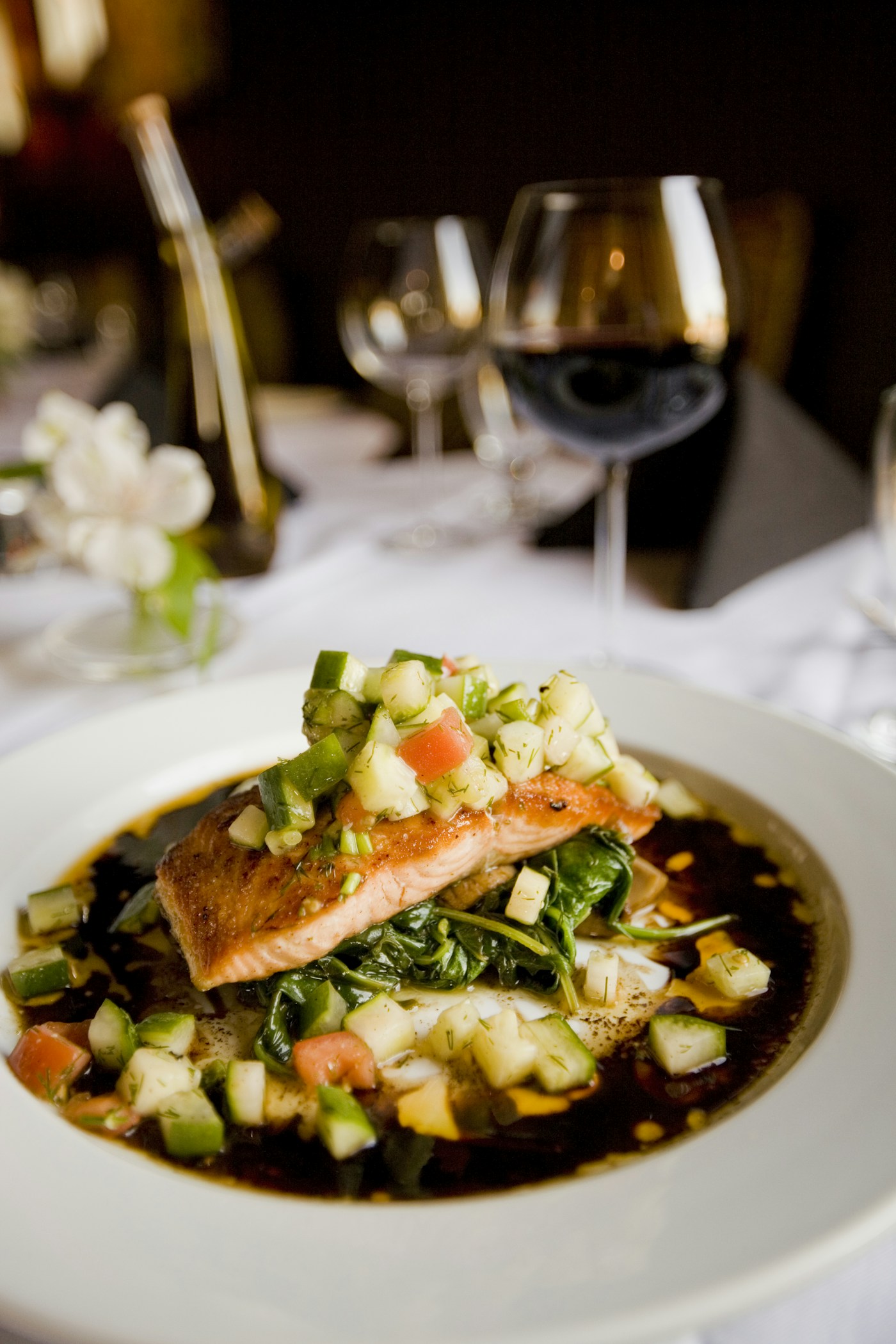
Make it your way.
Salmon flakes apart easily and does not need a complicated marinade. Keep the lemon and herbs optional, and serve it beside a familiar side rather than mixing everything together.
Simple swaps
Milder flavor
Skip the dill and keep the lemon on the side.
Prefer crisp edges
Use a shallow metal tray and avoid crowding the fillets.
Different side
Pair with plain rice or potatoes already enjoyed at home.
Lemon baked salmon
25 minutes · 2 servings
Ingredients
Check off ingredients as you go.
Allergens: Fish.
How to make it
- Heat the oven to 400°F / 200°C. Line a baking tray with parchment suitable for that temperature.
- Use fresh or fully refrigerator-thawed fillets; record their thickness because it changes the cooking time. Pat dry, check carefully for pin bones, and place skin-side down on the tray. Brush with oil and sprinkle lightly with salt.
- Bake for about 12–16 minutes, depending on thickness, until a food thermometer in the thickest part reads 145°F / 63°C.
- Rest briefly, remove skin if preferred, and check again for bones. Offer lemon wedges and dill separately.
Storing leftovers
Refrigerate within 2 hours and use within 3 days. Reheat leftovers to 165°F / 74°C.
Times and servings are unmeasured estimates. Allow for oven preheating and additional pan batches; check doneness with a thermometer rather than relying on time or color.
Before you cook
Wash hands and keep raw meat, fish, and egg utensils separate from ready-to-eat food. Keep perishables at 40°F / 4°C or below. Refrigerate in shallow containers within 2 hours, or 1 hour above 90°F / 32°C; discard food left out longer. Follow shorter package limits and the rice-specific instructions above. Texture labels describe a starting idea, not suitability for swallowing difficulties or young children. Prepare food for each eater’s skills, check every ingredient label, and supervise young children.
References: FDA safe handling and cooking temperatures; FDA raw flour guidance; NHS rice cooling and reheating.